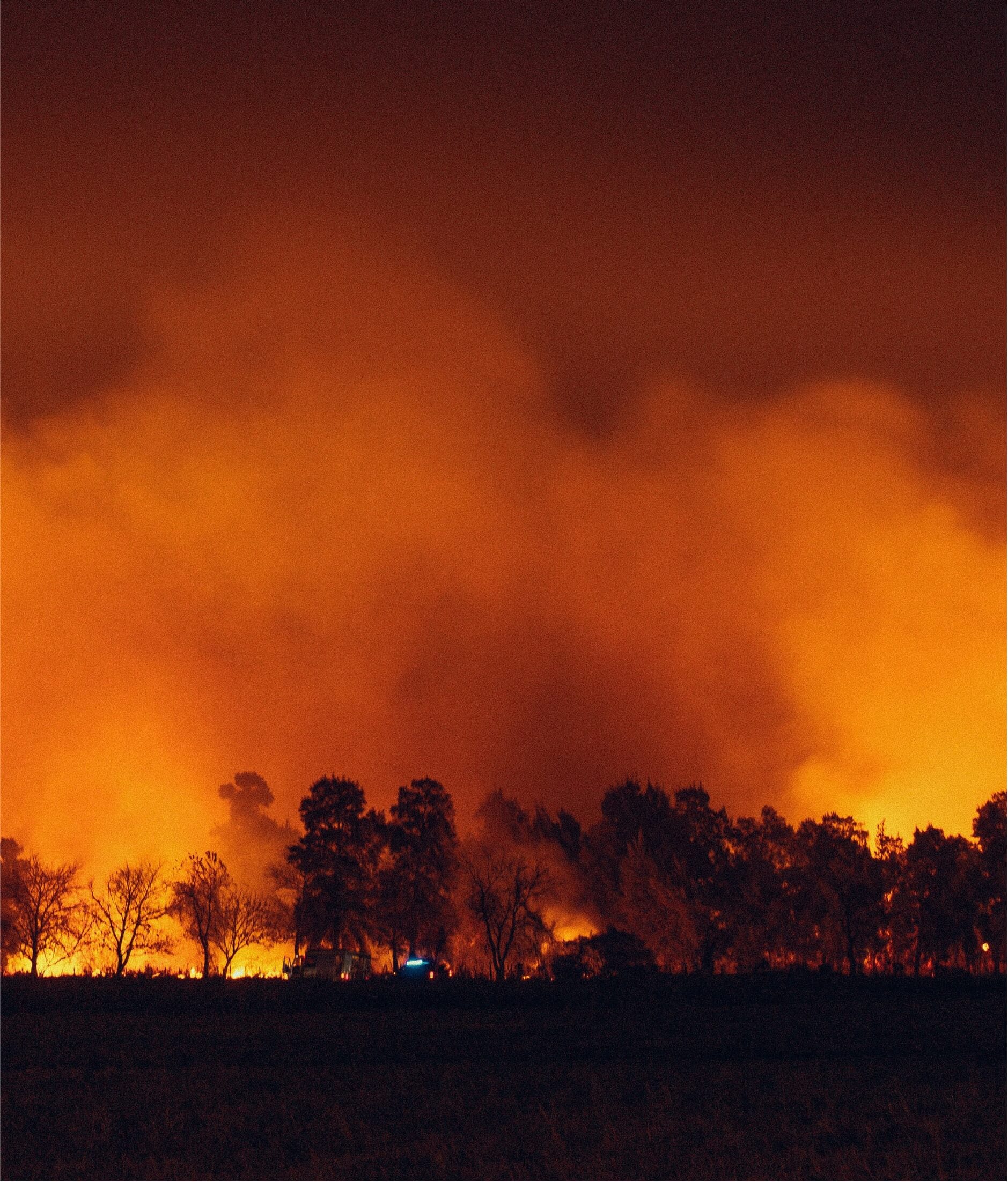
Europe’s wildfire risk is changing – what does this mean for insurers and reinsurers?
 Prefer us on Google


Europe accounted for 5% of the €173 billion in global wildfire losses from 2016 to 2025, and hence empirical experience demonstrates that wildfire has not yet been a major insured peril for Europe. But, as recent wildfire events demonstrate, the conditions that shape the risk are changing, and so the identification and management of risk accumulation across multiple lines of business is becoming more important for insurers and reinsurers.
Howden Re’s latest wildfire analysis, available upon request, looks beyond the striking and concerning headlines to examine the underlying context of European wildfire risk and address what this could mean for underwriting, volatility protection and resilience planning.
What the Howden Re report explores:
- A comparison of the insured and economic damage impacts of wildfire with those of other perils in Europe and the wildfire experience in North America and Australia.
- An assessment of why wildfire damage in Europe has, to date, been confined to a few tragic yet limited cases, through a cross-regional comparison of exposure and vulnerability
- A review of how state schemes and the private insurance markets provide coverage against European wildfire risk across multiple lines of business, with an assessment of how material any protection gaps are.
- How extreme temperature and drought have changed over time, leading to an escalation in the risk characteristics associated with wildfires.
- The role that exposure analytics plays in helping to identify peak wildfire accumulations, learning the lessons from prior wildfire events.
- How parametric reinsurance is an increasingly useful solution for managing emerging-peril volatility from perils such as wildfire that do not occur as typical events and lack relevant prior loss experience.
Below, Tim Edwards, Head of Howden Re International Catastrophe Analytics; Tobias Anderson, Head of Continental Europe; and Danielle Dron, Vice President & General Manager, Insurity Analytics, SpatialKey; set out the thinking behind Howden Re’s European wildfire capability and explain why the market should be looking beyond historical loss experience when planning to mitigate the societal and business impacts from future scenarios.
Why is Howden Re focusing on European wildfire?
Tim Edwards:
As measured by the number of buildings damaged, the current event is likely to be the most significant in recent European history, although economic losses from classes covered by private markets, state schemes and risk protections are expected to be around, or, below €0.5 billion. As the interaction between exposure and coverage is highly changeable, the potential for significant future losses exists, as highlighted by wildfire events in North America (2017, 2018 and 2025) and Australia (2019 and 2026).
The reality is that, while there has undeniably been a tragic impact, the latest European wildfire events are not yet on the same scale in terms of societal impact as wildfires in other parts of the world or other catastrophe perils in Europe. The recent European hail event in July, for instance, is likely to have caused significantly greater overall damage yet received a fraction of the coverage.
The report highlights the various economic impacts across multiple sectors and how material the protection gaps currently are. This was illustrated during last year’s wildfires in Spain, where 400,000 hectares were burnt, yet there were only around 900 claims, totalling €23 million of insured losses. Now is the time to build a deeper understanding of how wildfire risk will evolve, learning from these events and the experience of North America and Australia.
How does Europe compare with other wildfire-prone regions?
Tim Edwards:
Europe is warming faster than many other regions of the world, and we're seeing longer periods of extreme heat and drought, both of which create conditions conducive to wildfire. The question shouldn’t be solely focussed on the events we're seeing today, but also on understanding where future risk could emerge, and how quickly that landscape could change with further changes to the climate and housebuilding in wildfire-prone regions.
A key finding of our work is that Europe’s building stock differs significantly from that of North America and Australia, resulting in less than half the level of extreme building damage in Europe among buildings that have been impacted by wildfire.
Europe generally has stricter planning restrictions around development in the wildland-urban interface, so fewer people and properties are built immediately adjacent to high-risk wildfire zones. Crucially, European properties are typically constructed using masonry, concrete and tiled roofs, all of which are generally less susceptible to fire than the timber-frame construction more common in some other regions. That doesn't eliminate the risk, but it does help explain why we haven't experienced the same scale of insured losses to date.
Certain building characteristics in Europe do, however, increase susceptibility to wildfire damage. Howden Re offers clients the ability to identify these building characteristics to support underwriting and accumulation management initiatives.
How is Howden Re using open-source and proprietary hazard data in the SpatialKey platform?
Danielle Dron:
Understanding future risk requires more than historical loss data. SpatialKey has, for some time, provided Howden Re and its clients with the ability to monitor risk accumulation against current and future scenarios, as well as to track exposure to ongoing events.
The challenge with wildfire is that climate conditions are changing quickly, and clients need tools to help them understand where that risk could emerge and how exposure accumulates over time.
By combining Howden Re's understanding of insurance and reinsurance portfolios with the automated workflows provided by the SpatialKey platform, which embeds hazard data feeds that can be overlaid against portfolio data, Howden Re clients can identify peak wildfire accumulations to support underwriting, capital allocation and resilience planning decisions.
How can insurers and reinsurers protect against volatility from wildfire?
Tobias Anderson:
Howden Re’s analysis of historical nat-cat events demonstrates how reinsurance retentions on European events remain significantly above the levels seen in 2023 and prior years. Perils that do not yet generate single-event losses, such as wildfire, are therefore disproportionately impacting cedents’ profit and loss accounts.
As wildfire risk increases in Europe, underwriting actions are likely to manage risk accumulations across multiple lines of business, however, significant volatility remains.
Howden Re’s climate scientists and parametric reinsurance experts offer clients the proven capability to secure significant reinsurance capacity on a parametric basis, with advanced modelling techniques used to minimise basis risk and ensure cover is aligned with the classes and timescales that wildfires may affect.
Looking ahead
Europe’s latest wildfires are not a market-changing loss event. They are, however, a useful signal: the risk is evolving, and historical loss experience alone will not show where the next concentrations of exposure may develop.
The full analysis, available upon request, goes deeper into the changing European wildfire landscape, the factors that distinguish it from more mature wildfire markets and the analytics that can help the market prepare for what comes next. Tim will also explore these themes at the Monte Carlo Rendez-Vous this September.
Click to request access to the full wildfire analysis:
The full report is available on request and is being shared on a limited basis due to its restricted distribution. You will be sent a copy of the report directly by the Howden Re team once your request has been verified.